

I. Introduction to the ZGMN13CR2 Lining Plate for Large Ball Mills
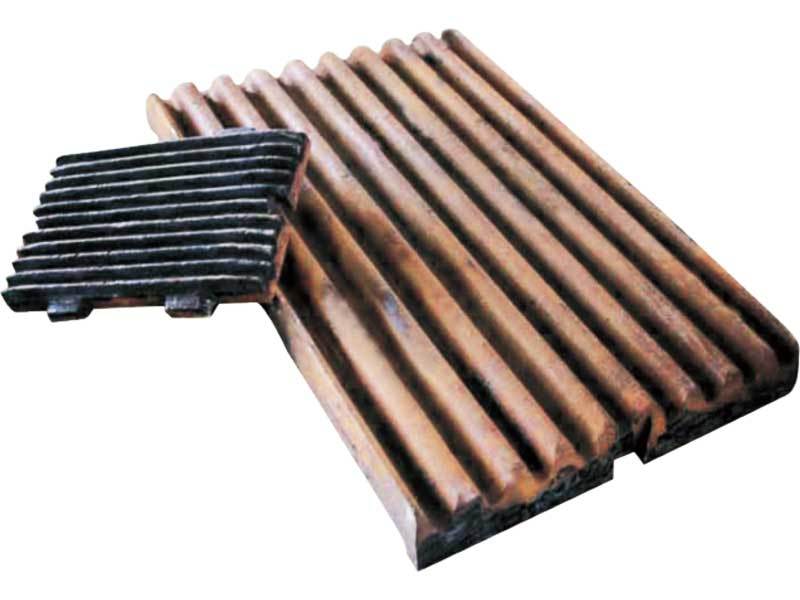
The ball mill liner is a critical component that protects the cylinder from direct impact and friction caused by steel balls and materials, while also enhancing the grinding effect by optimizing the motion state of the grinding media. It directly influences the mill's grinding efficiency and production output.
The ZGMn13Cr2 lining plate for large ball mills is an upgraded high-manganese steel product optimized for medium-to-high impact operating conditions.
Performance Metrics | Standard Mn13 Liner | ZGMn13Cr2 Liner Plate | Enhance the effect |
Initial Hardness | HB180-220 | HB230-280 | Enhanced resistance to early wear by 30% |
Hardness after hardening | HB500-550 | HB550-600 | Wear-resistant lifespan increases by 20-40% |
Impact toughness | ≥150J | ≥140J | Meeting the ball mill's crack resistance requirements |
Corrosion resistance | Acidic (pH < 6, highly corrosive) | Significantly improved (Cr passivation film) | Wet-process slurry life ↑25% |
Applicable Ball Mill Diameter | ≤4m | ≤6m | Large-scale breakthrough |
Wear Resistance: After water toughening treatment, a single-phase austenitic structure is formed, leading to work hardening under impact loads and significantly enhancing surface hardness—making it ideal for high-stress wear applications.
Toughness: Excellent impact toughness can withstand the vibrations and shock loads during ball mill operation, preventing liner plate fractures.
Process Compatibility: Supports casting production, enabling the creation of complex-shaped liners via processes such as sand casting and coated-sand casting, and offers customizable dimensions.
II. Production Processes and Performance Optimization Technologies
Core Process Steps
Casting Process: Utilizing sand casting or lost-foam casting, this process can produce large liners with uneven thicknesses. It’s essential to carefully control casting defects such as shrinkage cavities and cracks.
Thermal Treatment Regulation
Austempering: Heat to 1050–1100°C, hold at that temperature, and then rapidly quench in water to suppress carbide precipitation, resulting in a single-phase austenitic microstructure that enhances toughness and wear resistance.
Aging Treatment: After water quenching, aging at 380–620°C can further optimize the balance between hardness and toughness.
Innovative Design of Lining Plate Structure
Design Elements | Traditional Structure | Optimization Plan for ZGMn13Cr2 | Revenue |
Enhance bar shape | Rectangle | Wave-surface type | Steel ball drop trajectory optimization reduces energy consumption by 8%. |
Bolt Hole Design | Through-hole | Tapered locking hole + rubber seal | To prevent slurry erosion, bolt lifespan increases by up to 2 times. |
Thickness Gradient | Uniform thickness | Crown thickness increased to 120% | Key Wear Zone Life Matching |
Modularization | Integrated | Fan-shaped segmentation (≤30°) | Single-piece replacement reduces downtime by up to 70%. |
III. Application Scenarios and Selection Recommendations
ZGMn13Cr2 liners are primarily used for protecting the inner walls of large ball mills, with specific application scenarios including:
Iron and gold ore ball mills for the mining industry
Cement clinker ball mill for the building materials industry
Steel Slag Processing Ball Mill for the Metallurgical Industry
Selection and Usage Considerations
Custom Specifications: Customize liner plate dimensions according to the ball mill model (e.g., Φ3.2×13m, Φ4.6×15m), with thickness typically ranging from 50 to 150mm.
Installation requirements: Install using bolt fastening or welding methods, and ensure a thermal expansion gap is预留 to prevent deformation caused by temperature rise.
Keywords
Previous: Bronze Bearings
Ball Mill Liners
Product Categories
Related Products
Related Products


Contact Us
No.99 Hengshan Road, Jianxi District, Luoyang City, Henan Province
sweep
CITICTLC
Learn more about dynamic information